Saturday, August 30, 2014

Zimbabwe can't conduct Ebola tests - ministry


Big image

Harare - Zimbabwe's health ministry has reportedly admitted it is not well equipped to deal with Ebola in the event of an outbreak in that southern African country.

News Day reported on Friday that the Zimbabwean government had no capacity to conduct tests to detect the deadly disease.

According to the report, officials in the ministry of health and child welfare said specimens from suspected cases of Ebola would be referred to South African laboratories for verification.

The Minister of Health David Parirenyatwa said the World Health Organisation (WHO) had already organised a courier service which would take any suspected Ebola case specimen to South Africa, the report said.

This comes as a Daily News report said earlier this week that Zimbabwe’s state of preparedness on the Ebola outbreak had been branded as worrisome by aid agencies.

Economic sanctions

Health experts warned that a lot needed to be done in terms of information dissemination and infrastructure development at hospitals to quarantine patients in case of an outbreak amid economic hardships and poorly-stocked state hospitals, the report said.

Ebola has claimed 1 552 in West Africa, according to the WHO, with 3 069 suspected or confirmed cases in the region.

The disease causes massive haemorrhaging and has a fatality rate of up to 90%. It is transmitted through contact with blood and other bodily fluids.

Reports say that Zimbabwe's health sector has been affected by brain-drain and funding constraints over the past 14 years.

President Robert Mugabe blames the poor state of health facilities on what he terms the West’s illegal economic sanctions imposed by the European Union and the United States.

Ghana to become Ebola nerve centre


Big image

Accra - The Ghanaian presidency has announced that the United Nations will use Ghana as a base for supplies bound for countries stricken by the Ebola outbreak that has killed more than 1 550 people in West Africa.

More than 3 000 people have been infected since the virus was detected in the remote jungles of southeastern Guinea early this year and it has quickly spread to Liberia, Sierra Leone and Nigeria and Senegal reported its first case on Friday.

UN chief Ban Ki-moon had a telephone conversation with Ghana's President John Dramani Mahama, who agreed to let international agencies use Ghana's capital as a base for air lifting supplies and personnel to affected countries.

Mahama chairs the West African regional grouping, Ecowas, which has set up a solidarity fund to fight the deadly disease.

"Using Accra as the logistics and co-ordination centre will open a vital corridor to get urgently needed supplies and health personnel into the affected countries and areas," a statement said.

Regular international commercial flights to the affected countries have been suspended, making it difficult for supplies to reach them.

The statement said the UN and local authorities would work closely to put in place appropriate screening and prevention measures to avoid any adverse effects on Ghana as a result of the international operations.

The UN will also help review and strengthen Ghana's Ebola preparedness as steps are taken to prevent the virus from spreading to that country, according to the statement.

Ebola virus mutating fast - researchers


Big image

Chicago - Genetic studies of some of the earliest Ebola cases in Sierra Leone reveal more than 300 genetic changes in the virus as it leapt from person to person, changes that could blunt the effectiveness of diagnostic tests and experimental treatments now in development, researchers said on Thursday.

"We found the virus is doing what viruses do. It's mutating," said Pardis Sabeti of Harvard University and the Broad Institute, who led the massive study of samples from 78 people in Sierra Leone, all of whose infections could be traced to a faith healer whose claims of a cure attracted Ebola patients from Guinea, where the virus first took hold.

The findings, published in Science, suggest the virus is mutating quickly and in ways that could affect current diagnostics and future vaccines and treatments, such as GlaxoSmithKline's Ebola vaccine, which was just fast-tracked to begin clinical trials, or the antibody drug ZMapp, being developed by California biotech Mapp Biopharmaceutical.

The findings come as the World Health Organisation said that the epidemic could infect more than 20 000 people and spread to more countries. A WHO representative could not immediately be reached for comment on the latest genetic study.

Immune system

Study co-author Robert Garry of Tulane University said the virus is mutating at twice the rate in people as it was in animal hosts, such as fruit bats.

Garry said the study has shown changes in the glycoprotein, the surface protein that binds the virus to human cells, allowing it to start replicating in its human host. "It's also what your immune system will recognise," he said.

In an unusual step, the researchers posted the sequences online as soon as they became available, giving other researchers early access to the data.

Erica Ollmann Saphire of the Scripps Research Institute in La Jolla, California, has already checked the data to see if it impacts the three antibodies in ZMapp, a drug in short supply that has been tried on several individuals, including the two U.S. missionaries who contracted Ebola in Sierra Leone and who have since recovered.

"It appears that they do not [affect ZMapp]," said Saphire, who directs a consortium to develop antibody treatments for Ebola and related viruses. But she said the data "will be critical to seeing if any of the other antibodies in our pool could be affected."

'Hero' doctor

Saphire said the speed with which Sabeti and colleagues mapped genetic changes in the virus gives researchers information that "will also be critical" to companies developing RNA-based therapeutics.

That could impact treatments under way from Vancouver-based Tekmira Pharmaceuticals Corp and privately held Profectus BioSciences of Tarrytown, New York.

Part of what makes the data useful is the precise picture it paints as the epidemic unfolded. Sabeti credits years of work by her lab, colleagues at Tulane and the Sierra Leone Ministry of Health and Sanitation in developing a response network for Lassa fever, a virus similar to Ebola that is endemic in West Africa.

Several of the study authors gave their lives to the work, including Dr Sheik Humarr Khan, the beloved "hero" doctor from the Kenema Government Hospital, who died from Ebola.

The team had been doing surveillance for two months when the first case of Ebola arrived from Guinea on 25 May. That case involved a "sowei" or tribal healer, whose claim of a cure lured sick Ebola victims from nearby Guinea.

Initial spread

"When she contracted Ebola and died, there were a lot of people who came to her funeral," Garry said. One of these was a young pregnant woman who became infected and travelled to Kenema Government Hospital, where she was diagnosed with Ebola.

With the Lassa surveillance team in place, they quickly began testing samples.

"We've been able to capture the initial spread from that one person and to follow all of these contacts and everything with sequencing," Garry said.

The team used a technique called deep sequencing in which sequences are done repeatedly to generate highly specific results, allowing them to see not only how the virus is mutating from person to person, but how it is mutating in cells within the same person.

What is not clear from the study is whether the mutations are fuelling the epidemic by allowing the virus to grow better in people and become easier to spread. That will require further tests in the lab, Garry said.

First case of Ebola confirmed in Senegal


Big image
File: AP

Dakar - The first case of Ebola has been confirmed in Senegal, a major hub for the business and aid community in West Africa, Health Minister Awa Marie Coll Seck told a news conference on Friday.

The minister said the case was a Guinean national who had arrived from the neighbouring West African country, where the deadly virus was first detected in March.

Riots in Guinea as officials accused of transmitting Ebola


Big image
File: AFP

Conakry - Riots broke out in Guinea's second-largest city Nzerekore over rumours that health workers had infected people with the deadly Ebola virus, a Red Cross official and residents said on Friday.

A crowd of young men, some armed with clubs and pistols, set up barricades across the southern city on Thursday and threatened to attack the hospital before security forces moved in to restore order.

Gunshots were fired by the rioters and several people were injured, said Youssouf Traore, president of the Guinean Red Cross.

"A rumour, which was totally false, spread that we had sprayed the market in order to transmit the virus to locals," Traore said. "People revolted and resorted to violence, prompting soldiers to intervene."

Local Red Cross workers had to flee to the military camp with their medical equipment.

Concern over rising cases

Another resident said the security forces were preventing people leaving their neighbourhoods overnight.

The highly contagious Ebola virus was first reported in south-eastern Guinea in March and to date has killed more than 1 500 people in the worst outbreak in history.

More than 400 people have died in Guinea, although the rate of infection is slower than in neighbouring Liberia and Sierra Leone.

Conakry says it has controlled the epidemic but has expressed concern over rising cases in the southern border region, which it blames on victims spilling over from neighbouring countries in search of better treatment.

The Guinean government's last health report for 26 August showed there were 12 suspected, probable and confirmed Ebola cases in Nzerekore.

Friday, August 29, 2014

Many people questioned Thuthukile Zuma’s rise from an entry-level position of public liaison officer to chief of staff – earning nearly R1 million annually – in only one year.

Employment levels and annual salaries of 2012 BA Hons graduates

Chiefs of Staff

The appointment of Thuthukile Xolile Nomonde Zuma, the daughter of President Jacob Zuma, as the chief of staff in the Department of Telecommunications and Postal Services raised eyebrows in South Africa recently.

At only 25 years of age Thuthukile Zuma became the youngest chief of staff of a minister’s office ever appointed in South Africa.

Thuthukile Zuma was born on 28 April 1989, and is the youngest of president Jacob Zuma’s four daughters with ex-wife Nkosazana Dlamini-Zuma.

She matriculated from Westerford High School in December 2006. In 2011 she graduated from Wits University with a BA in anthropology, and followed it up with an honours degree at the same institution at 2012.

In 2013 she joined the ministry of state security as a public liaison officer (age 24). In May 2014 she was appointed as the chief of staff in the Department of Telecommunications and Postal Services at the age of 25.

Very fast professional rise

Many people questioned Thuthukile Zuma’s rise from an entry-level position of public liaison officer to chief of staff – earning nearly R1 million annually – in only one year.

The Mail & Guardian reported that this meteoric rise “raised concerns about political nepotism at the renamed Department of Telecommunications and Postal services”.

The new minister of Telecommunications and Postal Services, Siyabonga Cwele, was also the minister of state security where Thuthukile Zuma previously worked.

Thuthukile Zuma versus other ministerial chiefs of staff

MyBroadband selected a few ministerial chiefs of staff from other departments to see how their age and qualifications compare with that of Thuthukile Zuma.

What we found was that all of the surveyed chiefs of staff had a tertiary education, and were all between the ages of 40 and 65 (except for Thuthukile Zuma).

Ages of Government Department Chiefs of Staff

Ages of Government Department Chiefs of Staff

Thuthukile Zuma versus other graduates

To assess how Thuthukile Zuma’s professional progress compares with other BA Hons in anthropology graduates in South Africa, MyBroadband looked at the current positions of some of her peers.

To protect their privacy, the identities of people listed in the infographic below are not exposed. Market related salaries were used for their current positions.

Employment levels and annual salaries of 2012 BA Hons graduates

Employment levels and annual salaries of 2012 BA Hons graduates

Department of Telecommunications and Postal Services explains

MyBroadband asked the Department of Telecommunications and Postal Services whether Thuthukile Zuma was the best choice available for the position of chief of staff.

MyBroadband also asked the department how Thuthukile Zuma was able to gain the needed experience to become chief of staff so fast.

Department spokesperson Siyabulela Qoza said that her contract appointment in the ministry was consistent with the rules and regulations governing the appointment of people in government ministries.

“She holds an honours degree. Ms Zuma has worked with the Minister before. The Minister only considered her capacity to the job and her qualifications. Her genealogy was never a consideration,” said Qoza.

“Ms Zuma, just like all citizens, enjoys the freedom to participate in any economic activity, including being employed in government or the private sector.”

Thursday, August 28, 2014

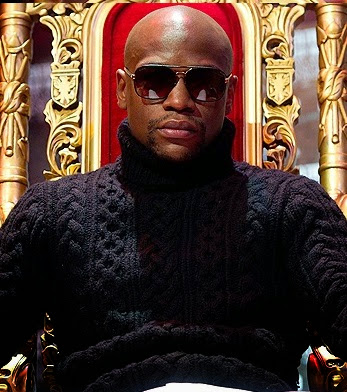
Floyd Mayweather Junior’s Family Background


Floyd Mayweather Junior’s Family Background

There are five boxers in the family.  The eldest boxer in the family is Floyd Mayweather Senor.  He has two brothers that are a boxer also namely: Roger Mayweather and Jeff Mayweather.  Mayweather Sr. has two sons that are a boxer also namely: Floyd Mayweather Jr. and Justine Jones which through DNA test he found out that he is his son.
     Floyd Mayweather Sr., Roger Mayweather and Jeff Mayweather turn trainers after their boxing career.  Floyd Mayweather Jr. and Justine Jones are still active boxers.

Father: Floyd Mayweather Sr.
Birth Name: Floyd Joy Mayweather
Born: 1952-10-19
Birthplace: Bronx, New York, USA
Nationality: US American
Hometown: Cleveland, Ohio, USA
Boxing Record: won 28 (KO 18)  + lost 6 (KO 2)  + drawn 1  = 35 rounds boxed 234 KO% 51.43 
Manager: Hank Grooms
Boxing Career
     ·    Two-time Michigan Golden Gloves Champion (1973 & 1974)
     ·    As a professional, Mayweather was ranked among the top ten welterweights in the world until he was stopped by Sugar Ray Leonard.
     ·    Shortly after fighting Leonard, Mayweather was shot in the leg during a family dispute. The injury almost halted his career.
Training Career
     ·    Claims to be "the greatest trainer in the world."
     ·    Mayweather has trained Floyd Mayweather Jr., Oscar De La Hoya, Joan Guzman, and Chad 
          Dawson.
     ·    Awarded "Trainer of the Year" by the World Boxing Hall of Fame in 2003, 2006, and 2008
     ·    Received the WBC "Lifetime Achievement Award"

Roger Mayweather (uncle of Mayweather Jr.)

Alias: Black Mamba
Born: 1961-04-24
Birthplace: Grand Rapids, Michigan, USA
Nationality: US American
Hometown: Las Vegas, Nevada, USA
Boxing Record: won 59 (KO 35)  + lost 13 (KO 6)  + drawn 0  = 72 rounds boxed 516 KO% 48.61 
Stance: Orthodox
Height: 5′ 7½″ / 171cm
Reach: 73½″ / 187cm
Trainer: Jesse Reid
Manager: Bill Baxter
Career Summary
Roger Mayweather was a two-time world champion. His first world title was the WBC super featherweight title, which he held from 1983 to 1984. He eventually moved up to light welterweight and captured the WBC title 1987, which he held until 1989. He later would capture the IBO light welterweight and IBO welterweight titles. Mayweather closed out his title wins by capturing the lightly regarded IBA welterweight belt.
He briefly stylized himself as the "Mexican Assassin", after a string of victories, most by knockout, over a series of world class Mexican fighters in Los Angeles between 1986 and 1989. This led to his second meeting with Mexico's top fighter Julio Cesar Chavez, who stopped him in ten rounds.
Mayweather was known for having good boxing skills, long arms, and a good right hand. However, he was widely considered by most boxing observers as having a bad chin.
Post-Fighting Career
He trained his nephew Floyd. He drew national attention after he entered the ring in the 10th round of Floyd's April 8, 2006 bout with Zab Judah, after his nephew was fouled by Judah near the end of the round. Mayweather was promptly suspended for one year and fined $200,000 by the Nevada State Athletic Commission.
Legal Troubles
August 3, 2009 - Mayweather, 48, was arrested on felony coercion and battery-strangulation charges and later freed from the Clark County jail on $13,000 bail, said Detective Ramon Denby, a police department spokesman. According to a police report, an officer responding to a disconnected 911 call found Mayweather fighting with a 25-year-old woman at the apartment in northwest Las Vegas. The woman, professional boxer Melissa St Vil, told police she had been punched in the ribs and hit Mayweather with a lamp during a struggle. She was treated by paramedics at the scene and taken to a Las Vegas hospital for treatment of injuries that included redness around her throat, police said. Mayweather had injuries on the head and the side of his face. It was not clear if he required medical treatment before he was taken to jail. The report says Mayweather formerly trained the St Vil, and had been following her since she severed their business relationship and went to another gym. It said Mayweather owns the apartment and was upset that his tenant was letting the woman live at the apartment. The tenant was not home at the time of the alleged attack, police said. 

Jeff Mayweather (uncle of Mayweather Jr.)
Alias: Jazzy
Born: 1964-07-04
Birthplace: Grand Rapids, Michigan, USA
Nationality: US American
Hometown: Las Vegas, Nevada, USA
Boxing Record: won 32 (KO 10)  + lost 10 (KO 2)  + drawn 5  = 47 rounds boxed 339 KO% 21.28
Stance: Orthodox
Career Summary
"Jazzy" Jeff Mayweather, known by the boxing media as the quiet Mayweather, boxed from super featherweight to light welterweight. He was a super featherweight IBO titleholder. He is the brother of Floyd Mayweather and Roger Mayweather, and the uncle of Floyd Mayweather Jr. and Justin Jones, Mayweather was the trainer of former WBO Heavyweight Sultan Ibragimov.

Justine Jones (half brother of Mayweather Jr.)
Is a promising amateur light-middleweight out of the Mayweather family's hometown of Grand Rapids, Mich., discovered from a DNA test that Floyd Mayweather Sr is his father.
This makes Jones a younger (paternal) brother of former Pound for Pound King and five division champion Floyd Mayweather Jr., and a nephew of former world boxing champions Roger Mayweather and Jeff Mayweather.  Mayweather Sr has taken over training of his newly, discovered son, Jones.